
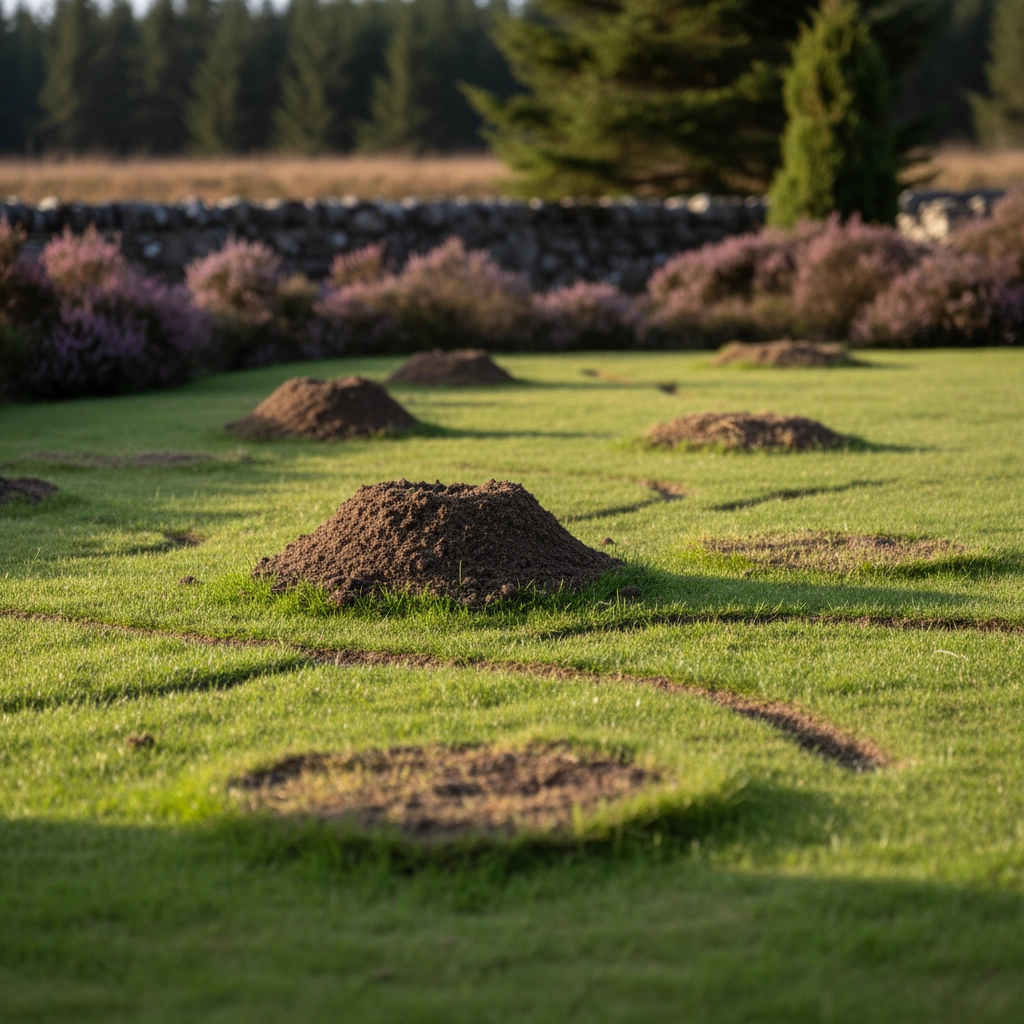
Those unsightly molehills appearing across your pristine Inverness lawn represent just the tip of an extensive underground network. While you're seeing surface damage, moles are operating in a complex tunnel system that extends far deeper than most homeowners realize. Understanding the true scope of mole excavation is crucial for effective control and protecting your property from long-term damage.
Moles in Highland gardens typically construct their primary tunnel networks between 6 and 12 inches below the surface, though this depth varies significantly based on soil conditions, seasonal factors, and the specific purpose of each tunnel. Research conducted across UK properties reveals that 80% of mole activity occurs within the first 8 inches of soil depth, where their preferred food sources: earthworms, chafer grubs, and leatherjackets: are most abundant.
The Multi-Level Tunnel Architecture
Moles don't simply dig random holes. They create sophisticated, multi-purpose tunnel systems that serve distinct functions at varying depths. Understanding this underground architecture helps explain why surface treatments often fail and why professional intervention becomes necessary.
Shallow Feeding Tunnels operate just beneath the surface, typically 2-4 inches deep. These temporary exploratory tunnels are constantly being excavated and abandoned as moles hunt for invertebrates. The visible ridges and raised areas in your lawn directly result from this shallow tunneling activity. Moles can excavate these feeding tunnels at an impressive rate of one foot per minute.

Main Runway Tunnels form the permanent transportation network, positioned 6-12 inches below ground level. In optimal soil conditions, these primary arteries can extend to depths of 18 inches. These tunnels connect feeding areas to nesting sites and serve as the mole's highway system throughout your property. Each visible molehill represents approximately 3-4 feet of tunnel excavation beneath the surface.
Deep Shelter and Nest Chambers are excavated 12-18 inches underground, often positioned beneath protective features like established tree roots, garden structures, or areas with consistent moisture. During breeding season, female moles construct specialized nursery chambers at these depths. In extreme cases, particularly in sandy soils, these deep tunnels can extend 3-6 feet below ground level.
Scottish Climate Impact on Tunnel Depth
Your Inverness location creates unique tunneling conditions that directly influence mole behavior and excavation patterns. Highland Scotland's distinctive seasonal moisture cycles significantly affect how deep moles dig and where they concentrate their activity.
During wet winter months, saturated soil becomes more workable, allowing moles to excavate deeper tunnel systems with less energy expenditure. The increased moisture drives earthworms and other invertebrates deeper into the soil profile, forcing moles to follow their food sources downward. This seasonal pattern explains why you might notice more extensive damage during spring months when moles emerge from deeper winter tunnels.
Conversely, during dry summer periods, compacted soil conditions restrict mole movement to upper soil layers where residual moisture remains. Surface irrigation and garden watering can inadvertently create attractive conditions that concentrate mole activity near the surface, increasing visible lawn damage.

The Highland climate also influences prey distribution patterns. Spring and autumn periods see peak invertebrate activity in upper soil layers, corresponding with increased shallow tunnel excavation. Winter conditions drive prey species deeper, requiring moles to extend their tunnel networks accordingly.
Soil Type Determines Excavation Potential
The geological composition of your property fundamentally determines how deep moles can effectively tunnel. Understanding your soil type helps predict the extent of potential mole networks and informs appropriate control strategies.
Sandy Soils common in coastal Highland areas allow moles to dig deeper with minimal resistance. These well-draining soils permit extensive tunnel networks at greater depths, making surface detection more challenging. Properties with sandy soil often experience more widespread underground damage before visible surface symptoms appear.
Heavy Clay Soils typical of many Highland properties restrict mole tunneling to shallower depths due to increased density and resistance. While this limitation might seem advantageous, clay soils often concentrate mole activity near the surface, resulting in more visible lawn damage and root disruption.
Loamy Garden Soils provide optimal conditions for mole excavation, supporting extensive tunnel networks at moderate depths of 6-10 inches. These fertile soils attract abundant invertebrate populations, creating ideal mole habitat that requires professional intervention to manage effectively.
Identifying Deep vs. Shallow Tunnel Systems
Recognizing the difference between surface feeding activity and established deep tunnel networks helps determine appropriate response strategies. Surface ridges and small soil eruptions typically indicate temporary feeding tunnels that may resolve naturally. Large, persistent molehills with substantial soil displacement suggest deep, permanent tunnel systems requiring professional attention.

Inspect your property for distinct molehill characteristics. Fresh, cone-shaped soil mounds indicate active deep tunneling, while flattened or weathered hills may represent abandoned sections. Active tunnel systems often display multiple connected molehills with visible pathway patterns across your lawn.
Test suspected tunnel areas by gently probing the ground with a garden tool. Shallow feeding tunnels will feel spongy and easily collapse, while deep runway tunnels maintain structural integrity and require more pressure to penetrate.
The Seasonal Tunneling Calendar
Mole excavation activity follows predictable seasonal patterns that influence tunnel depth and location. Understanding these cycles helps homeowners anticipate problem periods and schedule preventive measures appropriately.
Spring Activity (March-May): Peak tunneling season as moles establish new territory and expand existing networks. Breeding activity drives deep nest chamber excavation while increased food availability encourages extensive shallow feeding tunnels.
Summer Patterns (June-August): Reduced deep tunneling due to soil compaction, with concentrated activity in irrigated areas and naturally moist sections of your property. Mature moles maintain established tunnel systems while young moles disperse to new territories.
Autumn Preparation (September-November): Increased deep tunneling as moles prepare winter food caches and reinforce shelter systems. This period often sees the most extensive tunnel network expansion.
Winter Maintenance (December-February): Minimal new excavation with moles utilizing established deep tunnel systems. Cold weather drives moles deeper while reducing surface activity.
Professional Assessment and Long-Term Solutions
While understanding mole tunneling behavior provides valuable insight, effective control requires professional expertise and specialized equipment. Highland Pest Control's experienced technicians can accurately assess tunnel depth, identify active vs. abandoned systems, and implement targeted control strategies that address both surface and deep tunnel networks.
Our comprehensive mole control approach begins with detailed site assessment to map tunnel systems and identify high-activity areas. Professional-grade detection equipment allows us to locate deep runways that standard surface inspection might miss. This thorough evaluation ensures control measures target the most effective intervention points.
Advanced control techniques address multiple tunnel depths simultaneously. Surface treatments combined with deep placement strategies provide comprehensive coverage that prevents moles from simply relocating to untreated tunnel sections.
Preventing Future Deep Tunnel Development
Proactive measures can significantly reduce the likelihood of extensive tunnel network development on your property. Focus prevention efforts on eliminating conditions that attract moles and support their excavation activities.
Reduce soil moisture in areas prone to mole activity by improving drainage and adjusting irrigation practices. Overwatered lawns create ideal conditions for both mole prey species and tunnel excavation.
Maintain proper lawn health to discourage chafer grub and leatherjacket infestations that serve as primary mole food sources. Regular lawn treatments and appropriate fertilization reduce invertebrate populations that attract moles to your property.
Consider professional soil compaction in areas where deep tunneling poses particular risks to landscaping or structural elements. Strategically compacted soil layers can redirect tunnel development away from sensitive areas.
If you're discovering extensive mole activity across your Inverness property, don't wait for the underground damage to worsen. Contact Highland Pest Control for professional assessment and comprehensive control solutions tailored to Highland soil conditions and seasonal patterns. Our experienced team understands the unique challenges of Scottish mole control and provides effective, long-lasting results that protect your property investment.